Home›Blog›Upholstery & Mattresses in Oyster Bay
Oyster Bay, NY · Upholstery & mattress guideHarbor air, older houses, heirloom chairs and busy guest rooms all shape how sofas and mattresses wear in Oyster Bay. Here is how to keep them fresh, what to avoid, and when a professional clean makes sense.
In this guide
- Why Oyster Bay furniture wears differently
- Older homes and heirloom pieces
- Harbor air and musty cushions
- What builds up in a mattress
- A simple mattress routine
- Fabrics and what they tolerate
- Guest rooms and closed-up rooms
- Pets, kids and accidents
- Mistakes to avoid
- What a professional visit looks like
- Getting ready and drying
- Oyster Bay and nearby towns
- How booking works
- FAQ
What we clean
- Sofas, sectionals and loveseats
- Armchairs, recliners and dining chairs
- Mattresses and headboards
- Carpet, stairs and area rugs
- Pet stains and odor
Online offer
$20 off when you book onlineOpen 24/7. Same-day service when you call before 2 PM.Book onlineCall (516) 894-2919If you are searching for upholstery cleaning Oyster Bay NY families can trust with a favorite sofa or the mattress in the main bedroom, it helps to know what your furniture is up against. Oyster Bay is a hamlet in Nassau County and the seat of the Town of Oyster Bay, and it had 7,049 residents in the 2020 census (source). It sits right on the harbor, and that water shapes the air inside many homes.
This guide is about the soft things in your house: the couch everyone sits on, the reading chair by the window, the dining chairs, and the beds. As a team offering 24/7 carpet cleaning on Long Island, we clean far more than floors, and we see the same questions about fabric and mattresses in home after home. We put the useful answers in one place.
Why furniture in Oyster Bay wears in its own way
Every sofa collects dust, body oil and crumbs. What makes this area different is the mix of conditions around it. Homes near the harbor get damp, heavy air in summer. In winter the heat runs for months and the air inside turns dry. Fabric goes through that swing every year, and cushions absorb moisture, odors and fine dust along the way.
Many houses here are also older, with a mix of new pieces and furniture that has been in the family for a long time. A new performance-fabric sectional and an old velvet chair in the same room need very different care. Using one method on both is how damage happens.
Then there is how people live. Oyster Bay draws visitors to the waterfront and to local landmarks like Raynham Hall Museum, the old Townsend family home (source). Many families host relatives in summer and during the holidays, which means guest beds that sit unused for months and then get busy all at once.
Older homes, heirloom chairs and delicate frames
A chair that belonged to a grandparent is not just furniture. It may have a hand-tied spring seat, horsehair or cotton batting under the fabric, or a wood frame with an old finish. Water that soaks too deep can stain that batting, and the stain can wick back up to the surface as it dries. Strong cleaners can lift the finish off wood legs and arms.
For pieces like these, a good cleaner slows down. We check the fabric, test a hidden spot for color bleeding, and protect wood with care. Sometimes the right answer is a light, low-moisture clean that freshens the surface without risking what is underneath. Sometimes the honest answer is that a piece should only be vacuumed and spot cleaned. Either way, you should hear the plan before anyone starts.
Our fabric upholstery cleaning covers natural fibers, blends and older textiles, and the method changes with what we find on the tag and in the test spot.
Harbor air, summer humidity and musty cushions
A musty smell in a sofa or mattress is one of the most common things people mention when they call from homes near the water. Cushion foam and mattress layers act like a sponge. They take in moisture from the air, from sweat and from spills, and they release it slowly. When that moisture mixes with skin oils and dust, the smell builds.
Keeping humidity under control helps the whole house. The Mayo Clinic suggests keeping relative humidity below 50% at home to fight dust mites, and notes that a dehumidifier or air conditioner can help (Mayo Clinic). A small, cheap hygrometer lets you see the number instead of guessing.
Daily habits that keep cushions fresh
- Run the AC or a dehumidifier on sticky summer days, especially in lower levels.
- Keep wet towels, swimsuits and beach bags off the sofa.
If a smell has already set into the fabric, sprays usually hide it for a day or two. A deep clean that rinses out the oils and residue is what actually removes the source. When pets are part of the story, our odor removal treatment is designed to go after it instead of covering it with perfume.
What builds up inside a mattress
We spend many hours a night in bed, and the mattress quietly collects what we leave behind: sweat, skin flakes, hair, body oils, and in many homes, pet dander. Dust mites feed on skin flakes and like warm, humid places, which is why bedding is one of the places they gather.
The Mayo Clinic also points out that vacuuming is not effective at removing most dust mites and their allergens on its own (Mayo Clinic). Vacuuming is still worth doing for surface dust, but it is only part of the answer. That is where covers, hot washing of bedding and a periodic deep clean of the mattress itself come in.
A good mattress cleaning uses controlled moisture and strong suction, so the mattress gets clean without being soaked. A mattress should never be drenched. Too much water deep inside is hard to dry and can lead to the very smell you wanted to remove.
Common mattress problems we see
| Problem | Usual cause | What helps |
|---|---|---|
| Yellow patches | Sweat and body oils over time | A mattress cover now, and a professional clean with controlled moisture for what is already there |
| Stale or musty smell | Humidity and moisture held in the layers | Lower the humidity, air the room, and clean the surface without over-wetting |
| Kids’ accident spots | Urine soaking into the top layers | Blot fast, rinse lightly, and treat the source before the odor settles |
| Sneezing at night | Dust and allergens in bedding and mattress | Allergen-blocking covers, hot-washed sheets, regular mattress cleaning |
A simple mattress care routine
You do not need fancy products. A steady routine does most of the work. Here is the order we suggest to families in Oyster Bay and across the North Shore:
- Use covers. The Mayo Clinic recommends keeping mattresses and pillows in dustproof or allergen-blocking covers. A washable mattress pad on top adds another layer you can clean often.
- Wash bedding hot every week. The same source advises washing sheets, blankets, pillowcases and bedcovers in water that is at least 130 F (54.4 C), or using a hot dryer for items that cannot be washed hot.
- Strip and air the bed. Once a month, take everything off and let the mattress breathe for a few hours with a window cracked on a dry day or the AC running.
- Vacuum the surface. Use the upholstery tool slowly along seams and edges, where dust collects the most.
- Rotate the mattress. Turning it head to foot every few months helps it wear evenly. Check your maker’s advice before flipping, since many modern mattresses are one-sided.
- Book a deep clean. Once or twice a year, or right after an illness, a pet accident or a summer of guests, have the mattress professionally cleaned.
Fabrics and what they tolerate
The single most important step before cleaning any sofa is knowing the fabric. Most pieces have a tag under a cushion or on the deck with a cleaning code. We covered those codes in detail in our deep cleaning guide for sofas, chairs and carpet, so here we will focus on how common fabrics behave in a humid, salty, sunny setting like the North Shore.
| Fabric | How it behaves here | Care notes |
|---|---|---|
| Cotton and linen | Breathes well but soaks up spills and can shrink or brown if over-wet | Blot quickly; professional cleaning with controlled moisture |
| Velvet | Pile crushes and shows marks; can water-spot | Brush gently with the pile; never rub a wet spot |
| Microfiber | Stain resistant but shows rings from tap water | Follow the tag code; avoid soaking a single spot |
| Wool and wool blends | Strong and warm, but sensitive to heat and harsh soaps | Cool water and mild, wool-safe products only |
| Leather | Dries and cracks near heat vents and in strong sun | Wipe, clean and condition; keep away from radiators |
| Synthetic performance fabric | Handles daily life well; oils still build up on arms | Regular vacuuming; deep clean when arms and headrests darken |
Leather deserves a special word, because winter heat on the North Shore can be hard on it. Our leather furniture cleaning removes body oil and grime and then conditions the hide, so it stays soft instead of drying out by spring.

Guest rooms, summer visitors and closed-up rooms
Guest rooms are tricky. They sit closed for weeks, the air does not move, and dust settles on the bed and any upholstered chair. Then guests arrive, the room gets used every day, and afterward it closes up again with whatever was left behind.
A few simple habits help a lot:
- Open the door and run a fan in the guest room once a week, even when no one is staying.
- Keep a mattress cover on the guest bed at all times.
- Wash the bedding after every visit, not just before the next one.
Sleeper sofas need extra attention. The thin mattress inside folds away with crumbs, moisture and dust trapped in it. Open it up a couple of times a year, vacuum it and let it air before the next guest arrives. If it has been a while since the living room couch was cleaned, our article on how often to professionally clean your couch or sofa gives a simple schedule based on how you use it.
Pets, kids and accidents on cushions and beds
Dogs that love the beach and kids who eat on the sofa are a normal part of life. The goal is not to ban them from the furniture. The goal is to act fast and know what not to do.
With urine, speed matters most. The liquid soaks past the fabric into the foam or the top layers of the mattress. The surface may look clean after blotting, but the odor returns on humid days because the source is still inside. Our pet stain cleaning treats that source, and the same thinking applies to accidents on a child’s mattress.
Loose seat cushions take a lot of the abuse from spills, snacks and wet bathing suits. Our seat cushion cleaning treats each cushion on its own, front and back, so one bad spot does not leave the whole sofa looking uneven.

Mistakes that damage sofas and mattresses
Many of the hardest jobs we see started with a quick fix at home that went wrong. These are the ones to avoid:
If you are not sure whether a piece needs a professional clean yet, our list of signs your upholstery needs professional cleaning walks through what to look for, from dark arm rests to lingering odor.
What a professional visit looks like
A good upholstery and mattress visit is calm and predictable. You should know what will happen before anything gets wet. Here is how our crews usually work:
- Look and listen. We walk the rooms with you, read the tags, and ask about spills, pets and anything you have already tried.
- Test first. A small hidden spot on each fabric shows us whether colors are stable and how the fiber reacts.
- Clear price. You get a free quote with a clear price before we start, and it does not change halfway through.
- Dry soil out. Thorough vacuuming removes dust, sand and hair before any moisture touches the fabric.
- Clean to the fabric. We use eco-safe cleaning solutions that are safe for kids and pets, with moisture and pressure matched to each piece.
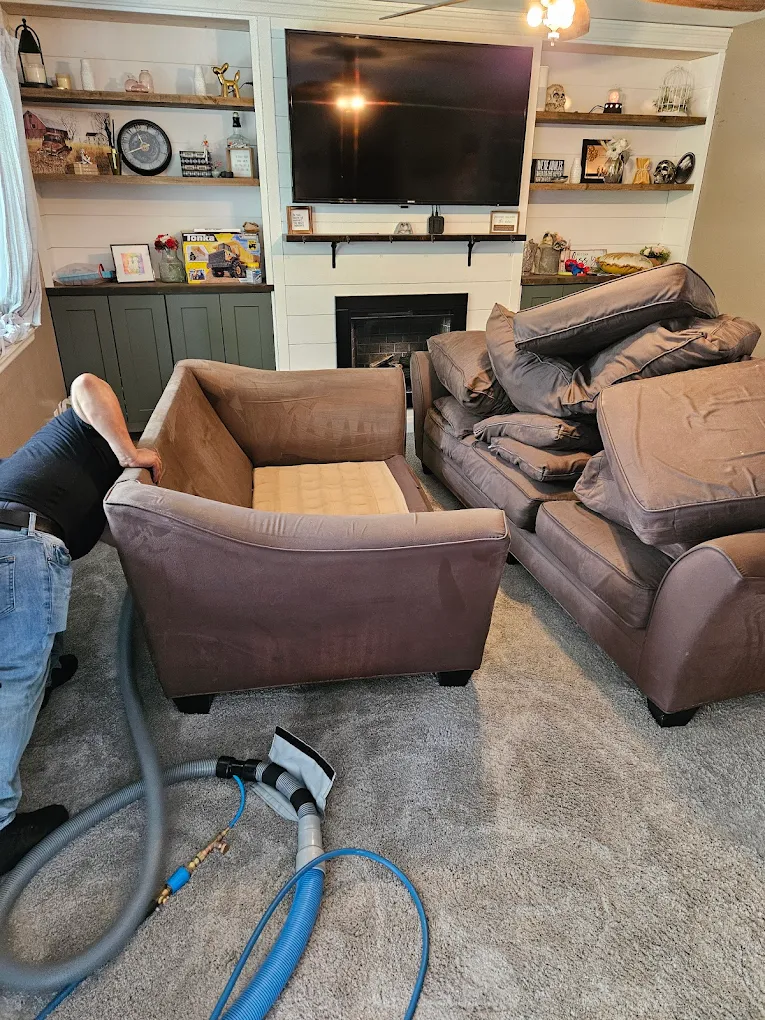
Sofas and sectionals are the pieces we clean most often, and our couch cleaning page explains the process step by step. For chairs, ottomans, headboards and everything else with fabric, see our full upholstery cleaning service. Families with allergies often ask about our eco-friendly, hypoallergenic cleaning, which uses gentle solutions and thorough rinsing so less residue stays behind.

Getting ready and drying afterward
You do not need to do much before the visit, but a few small steps help it go faster:
- Clear throw pillows, blankets, remotes and toys off sofas and chairs.
- Strip the beds that are getting mattress cleaning, including pads and covers.
- Point out any stains, accident spots or areas you are worried about.
- Plan where pets will stay during the visit and while things dry.
Drying time depends on the fabric, the thickness of the cushions and the air in the house. Most homes take about two to four hours to clean. If we clean carpet on the same visit, most carpets are ready to walk on within four to eight hours. Upholstery and mattresses dry faster when the air is moving and dry, so run the AC or heat and ceiling fans, and on humid harbor days keep windows closed. Stand loose cushions on their edge so air reaches both sides.
Serving Oyster Bay and the towns around it
Our crews work all along the North Shore of Nassau and into western Suffolk. Besides Oyster Bay, we often visit homes in Bayville for sofa and chair cleaning, clean carpet in Locust Valley, and handle mattresses in Syosset. Just to the west, families book rug cleaning in Glen Cove, and across the county line in Suffolk we clean furniture in Cold Spring Harbor too.
Many Oyster Bay homes pair wood floors with area rugs, and those rugs collect the same sand, dander and humidity as the sofa beside them. If you would like them done on the same visit, our rug cleaning in Oyster Bay checks dyes and fringe first, so each rug gets the method that suits it.
How booking works
Booking is simple. Call (516) 894-2919 any time, day or night; we are open 24/7. If you call before 2 PM, we do our best to come the same day. If you prefer to plan ahead, pick a time online and save $20 when you book online. You get a free quote and a clear price before we start, with no hidden fees.
Ready for fresher sofas and mattresses in Oyster Bay?
Call any time for a free quote, or book online and save $20. Same-day visits when you call before 2 PM.
Frequently asked questions
How often should I clean upholstery and mattresses in a home near the water?
For most homes, a professional clean of the main sofa and the mattresses about once a year works well. Homes with pets, young kids, allergies or a lot of summer guests often do better every six months. Regular vacuuming and controlling humidity in between make each clean last longer.
Can you remove a musty smell from a sofa or mattress?
In most cases, yes. A musty smell usually comes from moisture, body oils and dust held in the cushions or mattress layers. A deep clean that rinses out that residue, followed by good drying and lower indoor humidity, usually removes it. We tell you honestly before we start if a smell is likely to need extra treatment.
Is it safe to clean an old or heirloom chair?
Often it is, but it needs care. We check the fabric and the tag, test a hidden spot for color bleeding, and protect wood frames. For very fragile pieces we may suggest a lighter clean or spot cleaning only, and we explain why before doing anything.
Does mattress cleaning help with dust mites and allergies?
Cleaning the mattress removes surface dust, skin flakes and allergen-heavy debris that vacuuming alone leaves behind. For the best results, pair it with allergen-blocking mattress and pillow covers, hot-washed bedding and indoor humidity below 50%.
How long do upholstery and mattresses take to dry?
It depends on the fabric, the cushion thickness and the air in your home. Fans, the AC or heat, and standing loose cushions on edge all speed it up. Wait until a mattress feels dry before putting sheets back on.
Do you offer same-day upholstery and mattress cleaning in Oyster Bay?
Yes. We are open 24/7, and if you call before 2 PM we do our best to come the same day.
Is there a discount for booking online?
Yes. You save $20 when you book online. You can also call (516) 894-2919 any time for a free quote.
Open 24/7 across Nassau and Suffolk. Free quote, $20 off online.
