Home›Blog›Carpet Care in Port Washington, NY
Port Washington, NY · Carpet and rug care guideBay air, beach sand, wet gear and winter salt all reach the carpet in homes near the water. Here is how to keep carpet and rugs fresh, dry and clean on the Cow Neck Peninsula.
In this guide
- Why homes near the water are different
- Humidity and musty smells
- Finished basements
- Sand, boats and salt
- Area rugs near the water
- Pets and odor
- When water gets on the carpet
- Which method fits
- Mistakes to avoid
- Season-by-season care
- Getting ready and drying
- Port Washington and nearby
- How booking works
- FAQ
What we clean
- Wall-to-wall carpet and stairs
- Area and oriental rugs
- Sofas, chairs and recliners
- Mattresses
- Pet stains and odor
Online offer
$20 off when you book onlineOpen 24/7. Same-day service when you call before 2 PM.Book onlineCall (516) 894-2919When people search for carpet cleaning Port Washington NY, they usually have one of two problems: carpet that looks tired, or carpet that smells a little damp. In Port Washington, the second one is more common than you might think. The hamlet sits on the Cow Neck Peninsula in the Town of North Hempstead, Nassau County, with Manhasset Bay on its western side and Hempstead Harbor on its eastern side (source). Water on both sides is a big part of why people love living here. It also changes how carpet and rugs age.
This guide is for the real homes on the peninsula: colonials and capes with carpeted bedrooms and stairs, split-levels with a family room a few steps down, waterfront and near-water houses with big windows, and apartments and condos close to the train. As carpet cleaners in Nassau and Suffolk who work across the North Shore, our crews see the same patterns in these homes every season, so we put the practical parts in one place.
Why homes near the water need their own carpet plan
Carpet reacts to three things: the soil that lands on it, the moisture in the air, and how fast it dries after it gets wet. Near the water, all three work harder against you.
First, the air. On many summer days, the air near the bay feels heavy. Carpet fibers, the backing and especially the pad under the carpet hold on to some of that moisture. A room that never fully dries out is a room where old spills, pet accidents and body oils start to smell.
Second, the ground. The Cow Neck Peninsula is sandy country. In the 1870s Port Washington became an important sand-mining town, and it once had the largest sandbank east of the Mississippi River; those old sand mines later became the Harbor Links golf course (source). Neighboring Port Washington North sits on the Harbor Hill Moraine, a ridge of material left by glaciers (source). Sand and fine grit are simply part of life here, and they find their way inside on shoes, paws and beach bags.
Humidity, musty smells and closed-up rooms
A musty smell in carpet is almost always a moisture story. The U.S. Environmental Protection Agency suggests keeping indoor humidity between 30-60% to slow mold growth, and it lists air conditioners and dehumidifiers as ways to get there (EPA). That simple range is one of the most useful numbers a Port Washington homeowner can know.
Measure before you guess
A small digital humidity meter costs little and sits on a shelf. Put one in the carpeted room that worries you most. If it reads high for days at a time in summer, run the AC or a dehumidifier in that room and keep the door open so air moves. Empty the dehumidifier bucket often, or set it to drain.
Do not cover the smell
Carpet powders and plug-in scents hide a smell for a day or two, but they do not remove what is causing it. If a room still smells after the humidity is under control, the smell is coming from something in the carpet or pad. That is the point where professional odor removal makes sense, because it works on the source instead of the surface.
Finished basements and lower levels
Many homes on the peninsula have a finished lower level: a playroom, a TV room, a guest suite or a home gym. These rooms are usually the coolest part of the house, and cool air near concrete is where moisture collects. Carpet on a concrete slab feels comfortable, but it needs more attention than carpet upstairs.
- Watch the edges. Dark lines along walls or a stiff, crunchy feel near the corners can mean water came in at some point.
- Lift a corner of an area rug. If the carpet under it feels damp or smells sour, the rug is trapping moisture against the floor.
- Keep the dehumidifier running in summer. Lower levels often need one even when the rest of the house feels fine.
The EPA also advises against installing carpet in areas with a constant moisture problem (source). If your lower level gets wet every time it rains hard, cleaning will help for a while, but the real fix is to stop the water first. When the space stays dry, a deep clean can bring a lower-level carpet back to a fresh, soft feel.
Beach sand, boat days and winter salt
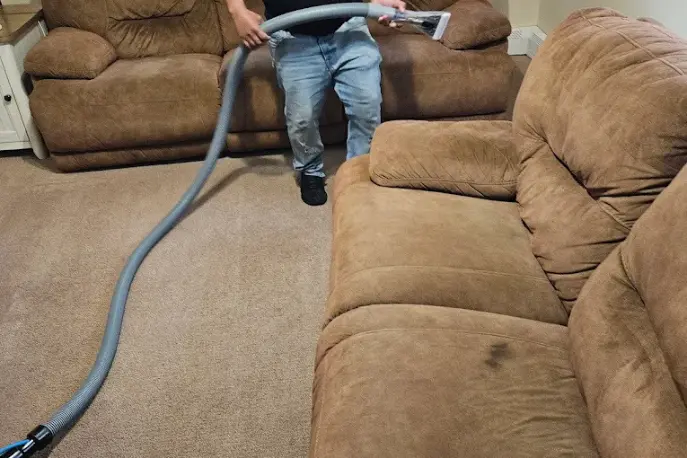
Sand wears carpet out. Sharp grains sit at the base of the fibers, and every step grinds them a little, leaving the gray, flat path from the front door to the kitchen.
Summer: beach bags, boat shoes and towels
After a day at the beach or on a boat, unpack outside or in a mudroom, not on the bedroom carpet. Shake towels and bags outside, rinse feet with a hose, and keep a bin by the door for wet gear. Damp towels dropped on carpet are a common cause of musty spots that nobody can explain later.
Commuter shoes and rainy days
Port Washington is the last stop of the Port Washington Branch of the Long Island Rail Road (source), so many residents walk to and from the station in all kinds of weather. Wet shoes and dripping umbrellas carry street grit straight inside. A boot tray and an umbrella stand by the door keep that water off the hallway carpet.
Winter: road salt
Salt from sidewalks and driveways dries into white rings on carpet. Those rings attract moisture from the air, which keeps the spot slightly damp and sticky. Blot salt marks with warm water and a white towel, then blot dry. Do not scrub, and do not let salt sit until spring.
Area rugs on wood floors near the water
Many homes near the water have wood floors with area rugs on top. Rugs make a room warm and quiet, but they behave differently from wall-to-wall carpet.
- Wool rugs hold a lot of moisture before they feel wet. In humid weeks, they can stay damp underneath and start to smell.
- Rugs on wood floors can trap water from a spilled vase or a pet accident against the wood. Lift and dry the area fast.
- Rugs in sunny rooms near big windows fade on one side over time. Turning them every few months evens out wear and sun.
Hand-knotted and older rugs need extra care. Some dyes can run if the rug gets too wet or is cleaned with the wrong product. Our oriental rug cleaning starts with a check of the dyes, fibers and fringe so we choose a safe method before any water touches the rug. If you are comparing options, our guide to the best area rug cleaning services on Long Island explains what to ask before you hand over a valuable piece.
Pets after the beach and the park
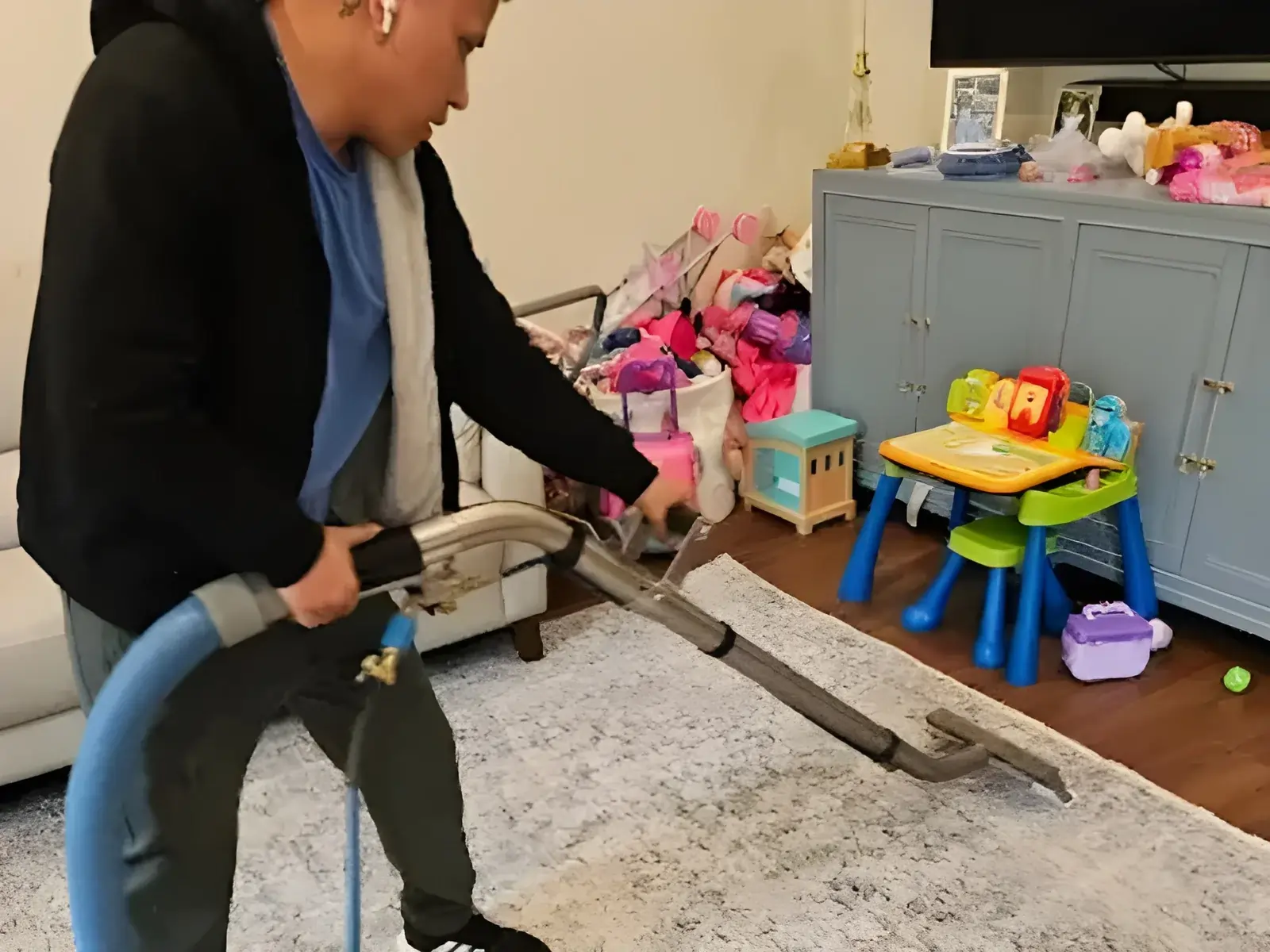
Dogs here often come home wet and sandy. Wet dog hair on carpet is not just a cosmetic problem. It adds moisture and body oil to the fibers, and in a humid house that combination can turn into a lasting odor.
Urine is the bigger issue. It soaks down through the carpet into the pad, and humidity brings the smell back up again and again. A spot that seems clean in January can smell strong in July. Our pet stain cleaning looks for where the urine actually spread under the surface, not just the spot you can see.
When water gets on the carpet
Water on the carpet is a different problem from a spill. A burst hose on the washing machine, a leaking water heater, an overflowing tub or rain coming in under a door can soak a large area in minutes. The EPA says water-damaged areas and items should be dried within 24-48 hours to prevent mold growth (source). That window is short, so speed matters more than anything else.
Here is what to do in the first hours:
- Stop the water. Turn off the valve or the main water supply if you can do it safely.
- Stay safe around electricity. Do not walk on soaked carpet near outlets or plugged-in devices. Turn off power to the area if you can reach the panel safely.
- Move what you can. Lift furniture, boxes and rugs off the wet area. Put foil or plastic under furniture legs to stop stains.
- Pull up standing water. Use towels or a wet vacuum. Press down hard; the pad holds much more water than the surface shows.
- Start air moving. Run fans, the AC or a dehumidifier, and keep doors to the area open.
- Call for help early. A large or dirty water event needs strong extraction to pull water from the pad, not just the top.
Our water damage restoration and carpet cleaning service is built for these moments, and because we are open 24/7, you can call at night or on a weekend.
Which cleaning method fits a damp-climate home
In a damp climate, the right method is the one that cleans deeply and leaves as little water behind as possible. Here is a plain comparison of the methods you will hear about.
| Method | What it does | Good for | Watch out for near the water |
|---|---|---|---|
| Hot water extraction (“steam”) | Rinses cleaning solution through the fibers and pulls it back out with strong suction | Sand, grit, pet spots and sticky residue in most homes | Needs good air flow afterward; strong suction is what keeps drying short |
| Shampooing | Scrubs foam into the carpet, then removes it | Some very heavy soil | Leftover soap can stay sticky and hold moisture and dirt |
| Low-moisture cleaning | Uses a small amount of solution that dries and is vacuumed up | Light maintenance between deep cleans | Does not rinse sand or urine from the base of the carpet |
| Rental machines | Small home units spray and suck back water | Quick touch-ups | Weak suction can leave carpet wet for a long time, which is risky in humid weather |
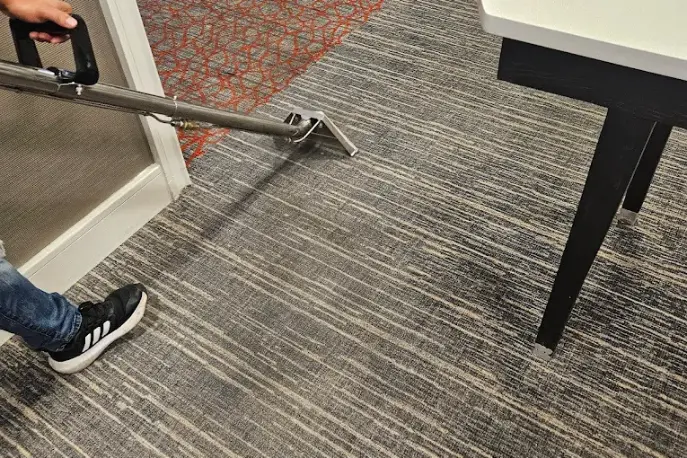
For most homes on the peninsula, steam carpet cleaning is the best fit because it actually rinses out the fine sand and the residue that holds onto moisture. For allergy-sensitive families, our eco-friendly, hypoallergenic carpet cleaning uses eco-safe solutions that are safe for kids and pets once dry.
Mistakes that trap moisture and dirt
Some common habits make carpet worse in a humid home. These are the ones we run into most:
If a stain has already been treated a few times and will not move, stop adding products. Our carpet stain removal service can often work on it, but the fewer chemicals already in the fiber, the better the chances.
A year of carpet care on the peninsula
Carpet care is easier when it follows the year. This is a simple plan that fits the way life moves on the water.
| Season | What happens | What to do |
|---|---|---|
| Spring | Rain, pollen, mud and the first beach days | Wash entry mats, check lower levels after storms, set up the dehumidifier |
| Summer | High humidity, sand, wet towels, guests | Keep humidity in the 30-60% range, unpack beach gear outside, vacuum entries often |
| Fall | Leaves, wet shoes, boats coming out of the water | Book the main deep clean before the heat goes on and the holidays start |
| Winter | Road salt, slush, dry heated air, closed windows | Salt mats at doors, blot white rings with warm water, air out closed rooms |
Most families do well with one deep clean every 12 to 18 months. Homes with pets, young kids, a busy lower level or frequent guests often need a clean every 6 to 12 months, plus spot visits after accidents. Bedrooms deserve attention too: if allergies are a concern, mattress cleaning can be done on the same visit as the carpet.
Getting ready, drying and putting rooms back
You do not need to do much before a visit, but a little preparation helps:
- Pick up shoes, toys, cords, plants and anything small from the floor.
- Take fragile items off low tables and shelves near the work area.
- Show us damp areas, musty rooms and old pet spots, even ones you think are gone.
- Plan where pets will stay during the visit and while the carpet dries.
- Make sure we can park close to the door with our equipment.
Most homes take about 2-4 hours to clean, depending on the number of rooms and how much soil there is. Most carpets are ready to walk on within 4-8 hours. Near the water, the weather matters: on a muggy day, run the AC and ceiling fans and keep windows closed, because damp outside air slows drying. On a cool, dry day, opening windows can help.
Leave the protective pads under furniture legs until the carpet is fully dry, and walk in clean socks for the first few hours. For more detail on what affects drying, see our article on how long carpet takes to dry after steam cleaning.
Port Washington and the villages around it
Port Washington had a population of 16,753 at the 2020 census (source), and the wider area includes several small villages, each with its own feel. Our crews work across the peninsula and the North Shore. Besides Port Washington, we often visit homes in Sands Point, Baxter Estates and Manhasset, and many families in the area also ask about upholstery cleaning in Port Washington for sofas and chairs. A little further west, we also handle rug cleaning in Great Neck for homes with fine and everyday rugs.
How booking works
Booking is simple. Call (516) 894-2919 any time, day or night. If you call before 2 PM, we do our best to come the same day. If you like to plan ahead, choose a time online and get $20 off when you book online. You get a free quote and a clear price before we start, and it does not change halfway through. There are no hidden fees.
Ready for fresher carpet in Port Washington?
Call any time for a free quote, or book online and save $20. Same-day visits when you call before 2 PM.
Frequently asked questions
Why does my carpet smell musty in summer?
Most musty smells come from moisture. Humid air keeps the carpet and pad slightly damp, and old spills or pet spots start to smell. Lower the indoor humidity with the AC or a dehumidifier, keep air moving, and if the smell stays, the source in the carpet or pad needs a deep clean or odor treatment.
How often should a home near the water get a professional carpet cleaning?
For most homes, every 12 to 18 months works well. Homes with pets, kids, a finished basement or a lot of beach sand often do better every 6 to 12 months, with extra care for entries and lower levels.
What should I do if a leak soaks my carpet?
Stop the water, stay safe around electricity, move furniture off the wet area and pull up as much water as you can. Then start fans and a dehumidifier and call for help early. Wet carpet and pad should be dried within 24 to 48 hours.
Can you clean area rugs that sit on wood floors?
Yes. We check the fibers, dyes and fringe first and choose a safe method for each rug. We also look at the floor under the rug, because rugs can trap moisture against wood.
How long until I can walk on the carpet after cleaning?
Most carpets are ready to walk on within 4 to 8 hours. On humid days, run the AC and fans and keep windows closed to help it dry.
Do you offer same-day service in Port Washington?
Yes. We are open 24/7, and if you call before 2 PM we do our best to come the same day. You also get $20 off when you book online.
Open 24/7 across Nassau and Suffolk. Free quote, $20 off online.
